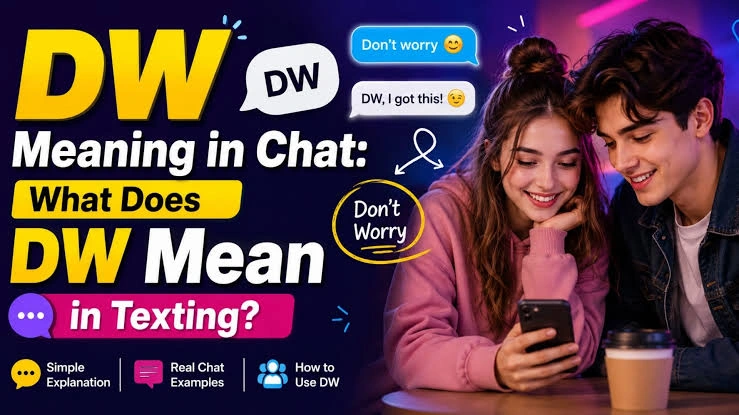

Seeing “dw” in a text can be confusing if you are not familiar with online slang. Someone might reply “dw” after you apologise, mention a problem, or say that you are worried about something. At first, it may look like a random abbreviation, but in most casual conversations, DW Meaning In Text is quite simple: “Don’t worry.” People use it to reassure someone, reduce tension, or let them know that a situation is not a big deal. It is common in text messages, social media DMs, group chats, gaming conversations, and other informal online communication. However, DW can have other meanings in specific situations, so understanding the context is important. This guide explains what DW means, how its tone changes, where people use it, how to reply naturally, and when you should avoid using it.
Table of Contents
- What Does DW Mean in Text?
- What Is the Most Common Meaning of DW?
- Why Do People Use DW Instead of “Don’t Worry”?
- Other Meanings of DW
- DW Meaning in Different Conversations
- DW on WhatsApp, Instagram, Snapchat, and TikTok
- DW Meaning in Gaming and Group Chats
- What Does DW Mean From a Girl?
- What Does DW Mean From a Guy?
- Is DW Rude, Cold, Flirty, or Caring?
- How to Understand the Tone of DW
- How to Reply When Someone Says DW
- DW vs No Worries vs It’s Okay
- Common Mistakes About DW
- When Should You Use DW?
- When Should You Avoid DW?
- Real Examples of DW in Text
- Similar Texting Abbreviations
- Final Thoughts
- FAQs
What Does DW Mean in Text?
The most common DW Meaning In Text is “Don’t worry.” It is an informal abbreviation people use when they want to reassure another person that everything is okay or that they should not stress about a situation. For example, if someone says, “Sorry I replied so late,” a natural response could be, “dw, you’re fine.” In that message, DW communicates reassurance rather than simply acknowledging the apology. It tells the other person that the late reply is not a problem. This is why DW often carries a friendly and supportive feeling in everyday conversations. It can be especially useful when people want to respond quickly without typing the complete phrase “don’t worry.”
DW is generally associated with casual digital communication rather than formal writing. You may see it in text messages, Instagram DMs, Snapchat conversations, WhatsApp chats, Discord servers, gaming communities, and other informal spaces. The exact emotional tone depends on the situation, but the basic idea remains the same: there is no need to worry or stress about what just happened. Oxford’s dictionary also lists “don’t worry” as an informal meaning of DW used particularly in text messages and social media.
What Is the Most Common Meaning of DW?
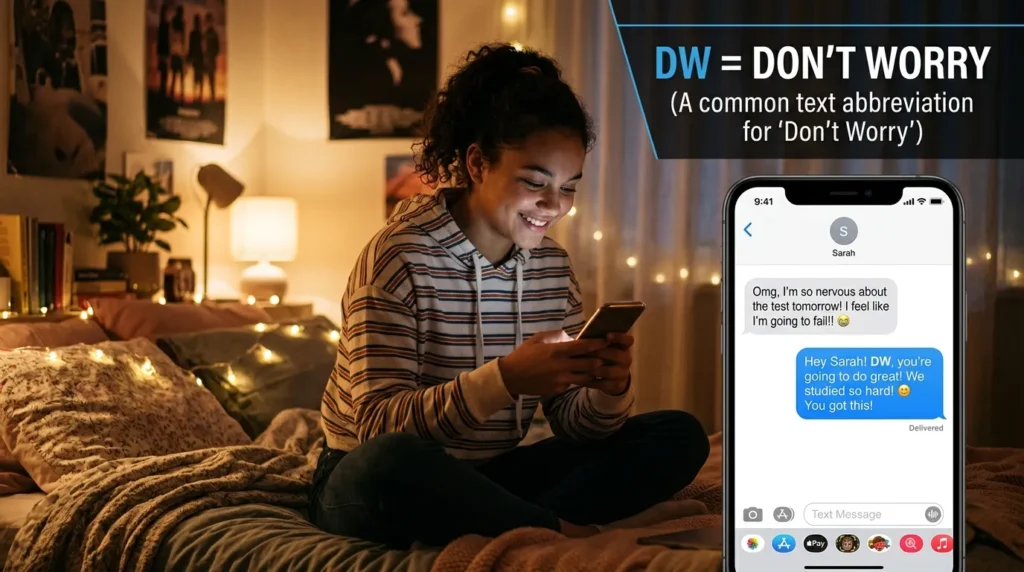
When someone sends DW in an ordinary conversation, the safest interpretation is usually “Don’t Worry.” This meaning is much more common in modern casual texting than the less familiar alternatives. Someone may use it after you apologise, cancel plans, make a small mistake, feel nervous about something, or explain a problem. The purpose is usually to make the conversation feel easier and less stressful.
For instance, imagine you tell your friend, “I’m really sorry, I forgot to bring your book.” If your friend replies, “dw, just bring it tomorrow,” they are not ignoring your mistake. They are telling you that it is not serious enough to worry about. Similarly, someone might say, “dw, I’ll handle it,” meaning that they have taken care of the situation and you do not need to stress. This is what makes DW more than a simple abbreviation. In many conversations, it performs a small social function by calming the other person and keeping the conversation positive.
Why Do People Use DW Instead of “Don’t Worry”?
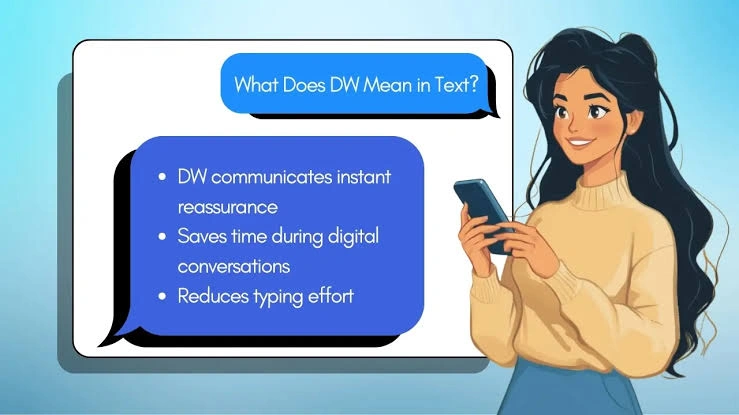
The main reason people use DW is speed and convenience. Digital conversations move quickly, especially when people are messaging from their phones. Typing two letters instead of ten characters makes a reply faster, and once both people understand the abbreviation, there is little risk of confusion. Similar shortcuts such as IDK, TBH, BTW, IMO, and BRB developed for the same general reason: they allow people to communicate common phrases without typing every word.
However, DW is not only about saving time. It can also make a message feel more relaxed and conversational. Compare “Don’t worry, everything is okay” with “dw, everything’s fine.” The first sounds complete and slightly more deliberate, while the second feels more like an everyday chat between people who are comfortable with each other. That does not mean DW is automatically more caring or less caring. The emotional effect depends heavily on the rest of the message, the relationship between the people, and what happened before the abbreviation was sent.
Other Meanings of DW
Although “Don’t Worry” is the dominant meaning of DW in casual texting, the abbreviation can represent other phrases in specific contexts. One recognised alternative is “Dear Wife” or “Darling Wife,” particularly in older online communities, personal writing, or discussions where someone refers to their spouse. Oxford lists both “darling wife” and “dear wife” as meanings of DW, alongside “don’t worry.”
Another context-specific meaning is “Data Warehouse.” This is completely different from texting slang and is mainly relevant to technology, databases, analytics, and business intelligence. If a colleague says, “The DW needs to be updated before the report goes live,” they are probably talking about a data warehouse rather than telling someone not to worry. Context is therefore essential. You should not automatically assume that every appearance of DW means “Don’t Worry.” The words surrounding the abbreviation and the subject of the conversation usually make the intended meaning clear.
DW as “Dear Wife”
When DW means “Dear Wife” or “Darling Wife,” it is usually used as a reference to someone’s spouse rather than as a direct response to another person. For example, someone might write, “DW and I are going out for dinner tonight.” In that sentence, “Don’t Worry” would make no grammatical sense, so the context immediately points toward the spouse-related meaning.
This usage is considerably less likely in a typical Gen Z-style conversation where someone simply replies “dw” to an apology or concern. If you see lowercase “dw” in a fast-moving casual chat, “Don’t Worry” is usually the better interpretation. Capitalisation can provide a small clue, but context is much more reliable than capitalisation alone.
DW as “Data Warehouse”
In professional technology conversations, DW can mean “Data Warehouse.” A data warehouse is a system used to collect, organise, and store data for reporting and analysis. You might see the abbreviation in discussions involving databases, business intelligence, analytics dashboards, data engineering, or reporting systems.
For example, “The DW pipeline failed overnight” has nothing to do with texting slang. The surrounding technical vocabulary makes the meaning obvious. This distinction is important because a person working in technology may encounter DW frequently but use it completely differently from someone chatting with friends on WhatsApp or Snapchat.
DW Meaning in Different Conversations
The meaning and emotional effect of DW become much clearer when you look at the type of conversation in which it appears. With friends, DW is normally a relaxed way to reassure someone. If a friend says, “Sorry, I completely forgot about our plan,” replying “dw, we can do it tomorrow” shows that you are not upset. In a family conversation, it can have a similar meaning, especially when someone is worried that they have caused a problem.
In dating conversations, DW can sound particularly soft because reassurance often plays a bigger role in personal communication. A person might say, “dw, I’m not upset” after a misunderstanding. In a gaming community, the same abbreviation may be much more practical and quick: “dw, I got it.” At work, however, DW should be interpreted carefully because the conversation may be technical and the abbreviation could mean “Data Warehouse.” This is why the topic of the conversation matters just as much as the letters themselves.
DW on WhatsApp, Instagram, Snapchat, and TikTok
On social platforms such as WhatsApp, Instagram, Snapchat, and TikTok, DW usually means “Don’t Worry” when it appears in a private message or casual conversation. Someone might send “dw 😊” after you apologise for something small, or “dw, you look great” when a friend is worried about how they look in a picture. The abbreviation works well in these environments because social media conversations are generally informal and fast.
The tone can change depending on what comes after DW. “dw, you’re okay” sounds reassuring and caring, while a simple “dw” may feel more neutral. If someone writes “dw 😂,” the emoji can make the message playful. If they respond only with “dw.” after a serious conversation, however, you might interpret it differently because punctuation and context can make a short message feel more distant. The abbreviation itself has not changed meaning; the surrounding communication has changed the tone.
DW Meaning in Gaming and Group Chats
Gaming and group chats are especially likely to use short abbreviations because people often need to communicate quickly. In a game, someone might make a mistake and say, “Sorry, I messed that up.” A teammate could reply, “dw, we got this.” Here, DW means “Don’t Worry,” but it also provides emotional support. It tells the other player not to get stuck on the mistake and encourages them to continue.
In group chats, DW can help prevent small misunderstandings from becoming arguments. If someone says, “Sorry guys, I sent the wrong file,” another person might respond, “dw, send the right one when you can.” The phrase makes the response feel less confrontational. It is short, but it can communicate patience and understanding when the context is friendly.
What Does DW Mean From a Girl?
If a girl sends DW in a casual conversation, it generally still means “Don’t Worry.” There is no special female-only definition of the abbreviation. The meaning comes from the situation rather than the sender’s gender. If she says “dw, it’s okay” after you apologise, she is most likely reassuring you that she is not upset about the issue.
The emotional tone may be friendly, caring, neutral, or occasionally distant depending on the full message. For example, “dw 🥹 you’re fine” feels warmer than a simple “dw.” If you are trying to understand whether she is being especially caring or simply polite, pay attention to the rest of the conversation rather than treating DW as a hidden romantic code.
What Does DW Mean From a Guy?
When a guy sends DW, it usually means the same thing: “Don’t Worry.” He may be reassuring you after a mistake, telling you that a problem is under control, or trying to make you feel less stressed. For example, “dw bro, I handled it” means that he does not want you to worry because he has taken care of the situation.
Just like with any other texting abbreviation, the relationship and context matter more than gender. If the conversation is romantic, DW might sound caring, but that does not give the abbreviation a separate romantic definition. If the conversation is between friends, it is more likely to be simple reassurance.
Is DW Rude, Cold, Flirty, or Caring?
DW is normally neutral to positive, but its tone can shift depending on how it is delivered. When someone says “dw, you’re good,” it usually sounds supportive. When they write “dw 😂,” it can sound playful. When they say “dw, I already handled it,” it can communicate confidence and reassurance. These uses are generally friendly rather than rude.
At the same time, a very short “dw” can sometimes feel cold or dismissive, particularly if the other person is discussing something serious. Imagine telling someone about a major problem and receiving only “dw.” You might feel that they did not fully understand the seriousness of what you were saying. That does not mean DW itself is rude. It means that a short abbreviation may not provide enough emotional context for a sensitive conversation.
DW is also not inherently flirty. It can appear in a romantic conversation and sound caring, but the romantic meaning comes from the overall conversation rather than the abbreviation. Understanding this distinction prevents people from reading too much into a simple two-letter response.
How to Understand the Tone of DW
If you want to understand exactly what someone means by DW, look at what happened immediately before the message. If you apologised, they are probably reassuring you. If you said you were nervous, they are probably trying to calm you down. If you mentioned a problem and they replied “dw, I’ll take care of it,” they are telling you that they have the situation under control.
You should also look at punctuation, emojis, and additional words. “dw 😊” usually feels warmer than “dw.” A longer message such as “dw, seriously, you don’t need to apologise” clearly communicates reassurance. If someone only sends “dw” in response to a serious emotional message, the brevity may make it feel less supportive. The best way to interpret DW is therefore to read the entire conversation rather than analysing the abbreviation in isolation.
How to Reply When Someone Says DW
Your response to DW should depend on why the person said it. If they are reassuring you after you apologised, a simple “Thanks, I appreciate it” works naturally. If the conversation is very casual, “Okay, thanks!” or “Got it” is enough. You do not need to over-explain a situation that the other person has already said is fine.
If someone says “dw, I’ll handle it,” you could respond with “Thanks, I appreciate that.” If a friend says “dw, you’re good,” you might simply continue the conversation. In a more professional environment, a response such as “Understood, thank you” is safer than replying with another abbreviation. The goal is to match the tone and seriousness of the original message rather than forcing a particular style of reply.
DW vs No Worries vs It’s Okay
DW, “no worries,” and “it’s okay” can all communicate reassurance, but they have slightly different conversational styles. DW is the shortest and most texting-oriented option. No worries sounds casual but works naturally in both speech and informal writing. It’s okay can sound more direct and can sometimes carry more emotional weight depending on the situation.
For example, after someone says, “Sorry I forgot to call,” all three could work: “dw,” “no worries,” or “it’s okay.” In a quick group chat, DW may be perfectly natural. In a face-to-face conversation, people are more likely to say “no worries” or “it’s okay.” In a serious situation, a complete sentence may be better than any abbreviation because it gives the other person more reassurance and emotional clarity.
Common Mistakes About DW
One common mistake is assuming that DW always means “Don’t Worry.” Although that is the dominant meaning in casual texting, DW has other established uses. A second mistake is thinking that DW automatically means “down.” While people may use abbreviations differently in specific communities, “Don’t Worry” is the standard interpretation in ordinary texting.
Another mistake is assuming that DW is always warm and caring. The abbreviation itself is neutral, and tone comes from context. A final mistake is using DW in every type of conversation. Slang that works perfectly with friends may look unprofessional in a formal email or official message. Understanding not only what an abbreviation means but also where it belongs is an important part of effective digital communication.
When Should You Use DW?
You can comfortably use DW when you are talking with friends, family members, classmates, gaming teammates, or other people who are comfortable with informal texting. It works especially well when you want to reassure someone quickly. If a friend apologises for being late, makes a small mistake, or worries that they have caused a problem, “dw” can make the conversation feel relaxed and forgiving.
It is also useful when you want to keep a conversation moving. Instead of typing “Don’t worry about it, everything is completely fine,” you can say “dw, you’re good.” The shorter version is natural when both people understand casual internet language. Still, clarity should always come before convenience. If you think the other person may not understand DW, spelling out “don’t worry” is the better choice.
When Should You Avoid DW?
Avoid using DW in formal emails, official documents, academic writing, job applications, customer-service communication, or serious professional situations unless the environment clearly uses casual messaging. In those settings, writing “Don’t worry” is more professional and leaves less room for misunderstanding.
You should also be careful when responding to someone who is genuinely upset, grieving, angry, or dealing with a serious personal issue. A single “dw” may feel too small for the situation. In those moments, a more thoughtful response can show that you actually listened. For example, instead of simply saying “dw,” you could say, “Don’t worry, I understand what happened. Take your time.” The longer response communicates empathy that a two-letter abbreviation may not provide.
Real Examples of DW in Text
The easiest way to recognise DW Meaning In Text is to examine realistic situations. Imagine someone texting, “Sorry, I forgot to send the document.” A response such as “dw, send it tomorrow” clearly means “Don’t Worry.” If a friend says, “I think I messed everything up,” and you answer, “dw, we can fix it,” you are using the abbreviation to reduce their anxiety. In a dating conversation, “dw, I’m not upset” provides reassurance after a misunderstanding.
The meaning can change completely in another environment. If a data analyst says, “The DW is missing yesterday’s records,” DW likely means “Data Warehouse.” If someone writes, “I’m going out with DW tonight,” the context may indicate “Dear Wife.” These examples demonstrate why context is more powerful than the abbreviation itself. The same two letters can represent different ideas, but the surrounding words usually make the intended meaning clear.
Similar Texting Abbreviations
DW is part of a much larger collection of abbreviations used in online communication. Some of the most familiar examples include NP for “no problem,” IDK for “I don’t know,” TBH for “to be honest,” NGL for “not gonna lie,” BRB for “be right back,” and TY for “thank you.” These shortcuts are popular because they allow people to express familiar ideas quickly without typing complete sentences.
Understanding related abbreviations can make social media and messaging conversations easier to follow, but not every abbreviation should be treated as interchangeable. “NP” can reassure someone that an issue is not a problem, while “DW” specifically tells someone not to worry. The emotional meaning may overlap, but the wording and conversational purpose are different. Learning these small distinctions can help you understand both the literal meaning and the tone behind modern texting language.
DW in Modern Texting Culture
Modern digital communication has made short abbreviations a normal part of everyday conversation. People often type quickly, switch between multiple apps, and communicate through short messages rather than complete paragraphs. As a result, expressions such as DW can carry an entire conversational idea in just two letters. The abbreviation is especially useful when the goal is reassurance rather than explanation.
At the same time, digital communication has made tone more difficult to read. Face-to-face conversations include voice, facial expressions, and body language, while a text may contain only two letters. That is why the same “dw” can feel comforting to one person and slightly cold to another. Emojis, punctuation, follow-up words, and the relationship between the people involved can all affect interpretation. Understanding texting slang is therefore not just about memorising definitions. It is also about reading the emotional context surrounding the words.
Final Thoughts
Understanding DW Meaning In Text is straightforward once you know the context. In everyday texting, social media, gaming chats, and casual conversations, DW most commonly means “Don’t Worry.” It is used to reassure someone, reduce stress, accept a small mistake, or let another person know that a situation is under control. Other meanings such as “Dear Wife” and “Data Warehouse” exist, but they are much more dependent on the subject and setting of the conversation.
The biggest takeaway is that you should never judge a short abbreviation by the letters alone. Look at what was said before it, what the conversation is about, and how the person communicates with you. A simple “dw” can be friendly, caring, neutral, or occasionally feel distant depending on the circumstances. Once you understand that difference, you can recognise DW Meaning In Text quickly and respond naturally without overthinking the message.
FAQs
What does DW mean in text?
DW most commonly means “Don’t Worry.” It is an informal texting abbreviation used to reassure someone that there is no need to stress about a situation.
What is the full form of DW in texting?
The most common full form of DW in texting is “Don’t Worry.” People commonly use it in casual messages and social media conversations.
What does DW mean on Instagram?
On Instagram, DW usually means “Don’t Worry” when it appears in a DM, comment, or casual conversation. The exact tone depends on the surrounding message.
What does DW mean on Snapchat?
DW on Snapchat generally means “Don’t Worry.” Someone may use it to reassure you after an apology, mistake, or concern.
What does DW mean on WhatsApp?
On WhatsApp, DW usually means “Don’t Worry.” It is commonly used between friends, family members, and other people having informal conversations.
What does DW mean from a girl?
DW from a girl normally means “Don’t Worry.” It does not have a special female-specific definition. The tone may be friendly, caring, neutral, or slightly distant depending on the conversation.
What does DW mean from a guy?
DW from a guy generally means “Don’t Worry.” If he uses it after you apologize or express concern, he is most likely reassuring you that everything is okay.
Is DW a rude word?
No. DW is not inherently rude. However, replying with only “dw” during a serious emotional conversation can sometimes feel too brief or dismissive.
Is DW flirty?
DW does not have a standard flirty meaning. It can appear in a romantic conversation and sound caring, but its basic meaning remains “Don’t Worry.”
Can DW mean Dear Wife?
Yes. DW can mean “Dear Wife” or “Darling Wife” in certain personal or online contexts. This meaning is much less common than “Don’t Worry” in ordinary casual texting.
Can DW mean Data Warehouse?
Yes. In technology, analytics, and database conversations, DW can stand for “Data Warehouse.” The professional context makes this meaning different from the casual texting abbreviation.
Is DW formal English?
No. When DW means “Don’t Worry,” it is informal texting language. In professional or academic writing, it is better to write the complete phrase.
How should I reply to DW?
A natural reply depends on the situation. You can say “Thanks,” “I appreciate it,” “Okay, thanks,” or simply continue the conversation. If the situation is serious, a more thoughtful response may be appropriate.
Does DW always mean Don’t Worry?
No. “Don’t Worry” is the dominant meaning in casual texting, but DW can have other meanings such as “Dear Wife” or “Data Warehouse.” Always use context to determine the intended meaning.