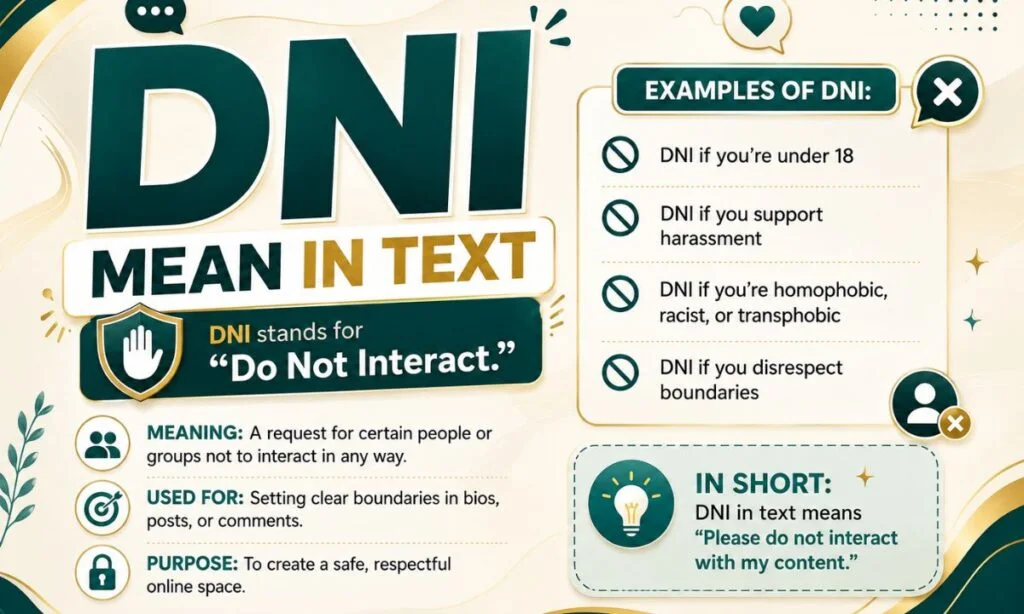

If you have seen DNI in someone’s TikTok bio, Instagram profile, Discord account, or online post, you may have wondered what those three letters actually mean. In most online conversations, DNI mean in text refers to “Do Not Interact.” It is used as a direct boundary to tell certain people not to comment, message, follow, reply to, or otherwise engage with someone’s content.
Unlike abbreviations such as LOL or IDK, DNI is not usually something people throw into an ordinary sentence just to save typing time. It is more commonly used as a warning, profile note, or boundary statement. You may see phrases such as “minors DNI,” “DNI if you support hate,” or “DNI with my account,” where the person is clearly identifying who they do not want interacting with them.
The meaning is simple, but the way people use DNI mean in text can vary. It may sound firm, protective, neutral, or occasionally harsh depending on the wording. This guide explains what DNI means, where it is used, how it differs from similar terms, what it means on platforms such as TikTok and Instagram, and what you should do when you see it.
What Does DNI Mean in Text?
The most common answer to DNI mean in text is “Do Not Interact.” People use this abbreviation online when they want to tell a particular person, group, or type of user not to engage with them or their content. That interaction could include sending messages, commenting, following, replying, sharing, or participating in a discussion.
For example, someone might write “Minors DNI” in their profile. In that case, they are asking people under the specified age group not to interact with the account. Another person might write “DNI if you support harassment,” which means they do not want people who support that behavior engaging with their profile.
So, when you see DNI mean in text, think of it as an online boundary or warning rather than a normal conversational abbreviation. The exact group being excluded will usually appear immediately after DNI or somewhere else in the person’s profile.
What Does DNI Stand For?
DNI stands for “Do Not Interact.” The letters come directly from the first letters of the three words: D for Do, N for Not, and I for Interact. It is an internet abbreviation that has become especially common in social-media communities and online spaces where people can easily receive unwanted attention.
The phrase is usually directed toward a specific category of people rather than everyone. For instance, “DNI trolls” means trolls should not interact, while “DNI if you’re under 18” establishes an age-related boundary. The abbreviation itself does not explain the restriction; the words surrounding it provide that information.
This is why understanding DNI mean in text requires looking beyond the three letters. If you see DNI by itself, you know it means “Do Not Interact,” but you still need to know who or what the person is asking not to interact.
DNI Meaning in Simple Words
In simple words, DNI means “please do not interact with me or my content.” It is similar to putting a digital “keep away” or “please don’t engage” notice on a profile. Depending on the situation, the person may not want certain users to comment, send DMs, follow them, or participate in their online community.
For example, “DNI if you are here to argue” means the person does not want people who intend to start an argument engaging with their post. Similarly, “DNI with my account if you support bullying” tells a particular group to stay away from the user’s content.
The phrase can be short because the person expects readers to understand the boundary without a long explanation. However, DNI does not automatically block anyone. It is a stated request or boundary, not a technical blocking feature built into social media.
Is DNI Slang or an Acronym?
DNI is best described as an internet acronym or initialism, although it is also commonly grouped with online slang. It is formed from the first letters of “Do Not Interact” and has developed a recognizable meaning within online communities.
Unlike casual abbreviations such as “brb” or “ttyl,” DNI usually serves a specific purpose. It communicates a boundary rather than simply shortening a phrase during an ordinary conversation. Wiktionary also lists “Do Not Interact” as an internet-slang meaning of DNI and notes its use as a notice asking specified groups not to interact with the poster.
This distinction explains why DNI mean in text is often found in profiles and bios instead of normal one-to-one messages. It works more like a public instruction than a typical texting shortcut.
Where Is DNI Commonly Used?
DNI mean in text is especially common in online spaces where people interact with strangers or large communities. Public social-media profiles, fandom accounts, art pages, roleplay accounts, and community spaces can attract many different types of users, so some people use DNI statements to establish boundaries before conversations begin.
You may find DNI in TikTok bios, Instagram bios, X profiles, Tumblr posts, Discord profiles, fandom pages, comment sections, and community rules. It can also appear in captions or posts when someone wants a particular group to avoid engaging with a specific piece of content.
The wording can be extremely specific or quite broad. Someone might write “DNI trolls,” while another person may provide a longer list of groups or behaviors. In either case, the purpose is generally the same: clearly communicate who should not interact.
DNI Meaning on TikTok
On TikTok, DNI mean in text is commonly seen in bios, captions, comments, and community-related posts. Because TikTok allows content to reach people far beyond the creator’s existing followers, users may add DNI statements to make their boundaries clear to people who discover their accounts.
For example, a TikTok bio might say “DNI if you support harassment” or “Minors DNI.” The person is telling those specified users not to comment, message, follow, or otherwise engage with the account. The exact restriction depends on what the profile owner has written.
DNI on TikTok does not have a special TikTok-only definition. It still means “Do Not Interact.” The platform simply provides a common environment where this type of boundary-setting language is useful.
DNI Meaning on Instagram
On Instagram, DNI mean in text frequently appears in bios, captions, profile descriptions, and sometimes comments. An Instagram user may use DNI to communicate boundaries before someone follows or sends a direct message.
For example, someone could write “DNI if you send hate” in their bio. This means they do not want people who intend to send hateful messages or comments interacting with their account. Another profile might use a more specific list describing the people or behaviors they want to avoid.
Because Instagram profiles can be public and discoverable, DNI can help users communicate expectations without explaining the same boundary individually to every new follower. It is essentially a short public notice.
DNI Meaning on Discord
Discord is another place where DNI mean in text can be particularly relevant. Users may include DNI statements in their profiles, introductions, server rules, or community spaces. In a large server, these boundaries can help clarify which types of interactions someone does not welcome.
For example, a fictional community rule might say “DNI if you intend to harass members.” A personal profile could also include a list of groups or behaviors that the user does not want interacting with them.
On Discord, however, a DNI statement is not the same as a server ban. A user can request that someone not interact with them, while moderators may separately enforce community rules using actual server permissions or moderation tools.
DNI Meaning on Snapchat
On Snapchat, DNI mean in text can appear in profiles, usernames, public posts, or conversations connected to online communities. Because Snapchat is more private than many public social platforms, DNI may be less noticeable in ordinary personal conversations but can still appear among users who maintain public profiles or specific online boundaries.
If someone writes “DNI” and identifies a particular group, they are asking that group not to engage with them. The request can include messaging, replying, adding, or other forms of interaction depending on the person’s stated boundary.
If someone sends you DNI directly, it is best to take the message literally. Unless they clearly indicate that they are joking, the safest response is to respect the request and avoid continuing the interaction.
Common Examples of DNI in Text
Seeing DNI mean in text in actual examples makes its purpose much easier to understand. The abbreviation normally appears together with a condition, group, or behavior that the person does not want around their account.
Example 1:
“Minors DNI.”
Meaning: People under the specified age should not interact with the account.
Example 2:
“DNI if you support bullying.”
Meaning: People who support bullying are being asked not to interact.
Example 3:
“DNI trolls.”
Meaning: Trolls should not engage with the account or content.
Example 4:
“DNI if you’re here to argue.”
Meaning: The person does not want people who intend to start arguments interacting.
Example 5:
“DNI with this post if you can’t be respectful.”
Meaning: Only respectful interaction is welcome.
These examples show that DNI mean in text is not normally an insult by itself. It is a boundary-setting phrase, and the words following DNI explain the specific boundary.
Why Do People Use DNI?
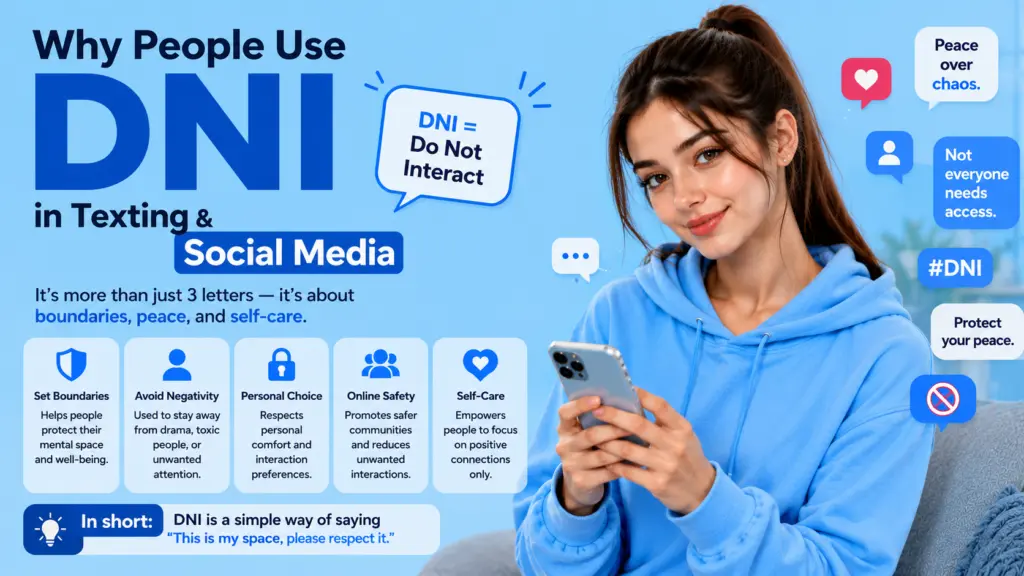
People use DNI mean in text primarily to establish boundaries and control the type of interaction they receive online. Public profiles can attract strangers, unwanted comments, arguments, spam, or behavior that a user does not want to deal with. A short DNI statement allows them to communicate their expectations before an interaction begins.
For some users, it is also a way to create a more comfortable online environment. Fandom communities, personal accounts, art pages, and discussion spaces may have specific rules about who can participate. A DNI list can make those expectations visible instead of leaving people to guess.
It is important to remember that a DNI statement is not necessarily personal hatred toward everyone listed. Someone may simply be saying that they do not want certain types of interaction on their account. The meaning depends on the specific wording and context.
Is DNI Rude?
Whether DNI mean in text sounds rude depends on how it is written and what the person is trying to communicate. A simple DNI statement can be completely neutral because it is simply explaining a boundary. However, aggressive wording around it can make the message sound harsh or confrontational.
For example, “DNI please” is relatively straightforward, while “DNI and don’t come back” sounds much more hostile. The underlying request is similar, but the tone is noticeably different.
DNI can also feel firm because it is a direct instruction. That does not automatically make it disrespectful. Online boundaries often need to be clear, and a person may prefer direct language rather than leaving room for misunderstanding.
Is DNI a Warning?
Yes, DNI can function as an online warning or boundary notice. When someone places it in a profile or post, they are warning specific users that interaction is unwanted. The purpose is to communicate the boundary before someone engages.
For example, “DNI if you are under 18” is a clear notice that a particular age group should not interact. Similarly, “DNI if you intend to send hate” warns potential users that hostile engagement is not welcome.
However, DNI does not itself enforce the boundary. Someone can still ignore the request and interact. The account owner may then use platform tools such as blocking, restricting, muting, or reporting if necessary.
Is DNI the Same as Blocking Someone?
No. DNI mean in text and blocking are related to unwanted interaction, but they are not the same thing. DNI is a request or stated boundary, while blocking is a technical action that prevents or limits another account’s ability to interact.
For example, if someone writes “DNI trolls” in their bio, trolls may still technically be able to view or interact with the profile depending on the platform’s privacy settings. The DNI statement simply tells them not to do so.
Blocking, on the other hand, is an actual account-level action. A person may use a DNI statement first and then block users who deliberately ignore it, but the two should not be treated as identical.
What Does DNI Mean in a Bio?
When you see DNI mean in text in someone’s bio, it almost always serves as a public boundary. The profile owner is telling certain categories of people not to follow, message, comment on, or otherwise engage with their account.
A bio might say something like:
“DNI: trolls, hate accounts, or anyone looking for arguments.”
This means the user does not want those categories interacting with them. The exact interpretation depends on the rest of the bio.
DNI lists can be very short or surprisingly detailed. Some users identify only one group, while others list several conditions. The important thing is to read the complete statement rather than assuming every DNI list has the same rules.
What Does DNI Mean in a Comment?
When DNI mean in text appears in a comment, it can work slightly differently from a profile bio. A person may use it to tell a particular group not to engage with a specific post, discussion, or thread.
For example, someone could write “DNI if you’re only here to start drama.” They are not necessarily asking everyone to leave; they are directing the request toward people who intend to create conflict.
If DNI is directed at you personally, the best approach is usually to respect it rather than arguing about the request. Responding aggressively to a boundary is likely to create the exact interaction the person was trying to avoid.
How Should You Respond to DNI?
If you see DNI mean in text on someone’s profile and you fall within the group they listed, the simplest response is not to interact. You generally do not need to announce that you are leaving, explain yourself, or argue about the rule.
If someone sends you “DNI” directly, take a moment to understand the context. If they genuinely mean “Do Not Interact,” continuing to message them would ignore their stated boundary.
You also do not need to respond to a DNI notice with another abbreviation. In many cases, no response is the most respectful response. If clarification is genuinely necessary, ask only when doing so will not itself violate the person’s stated boundary.
Can DNI Be Used Jokingly?
Yes, although context is important. People sometimes use DNI mean in text humorously or dramatically, particularly with friends or in memes. For example, someone might jokingly write “DNI if you hate pineapple pizza” even though they are not seriously trying to prevent people from interacting.
The exaggerated wording can make the joke obvious, especially when paired with laughing emojis or playful content. However, you should not assume every DNI statement is a joke.
If the person has listed serious boundaries or appears to be discussing a sensitive issue, it is safer to treat the statement seriously. The surrounding post, profile, and tone usually provide enough clues.
DNI vs. BYI
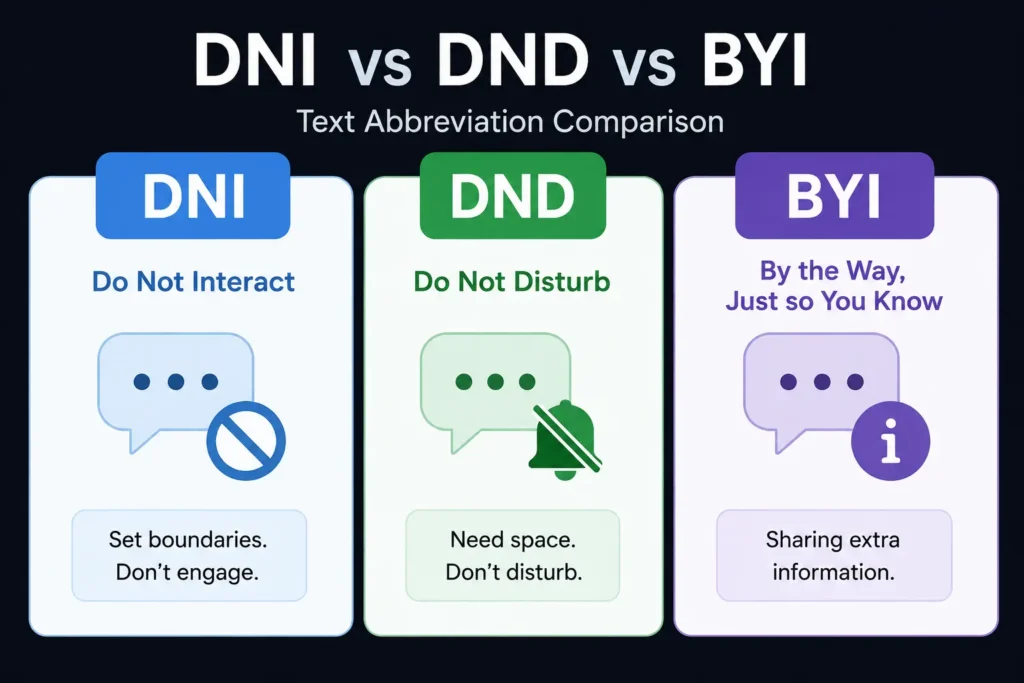
DNI and BYI are closely related terms, but they serve different purposes. DNI means “Do Not Interact,” while BYI generally means “Before You Interact.” BYI is often used to introduce information, conditions, or important context that someone wants others to read before engaging.
For example:
| Term | Meaning | Main Purpose |
| DNI | Do Not Interact | Tells specific users not to engage |
| BYI | Before You Interact | Gives information or conditions first |
| DND | Do Not Disturb | Requests no interruptions |
| Block | Prevent interaction | Uses a platform feature |
| No DM | No Direct Messages | Specifically limits private messages |
The main difference is that DNI is a direct boundary against interaction, while BYI is more like a notice that should be read before interaction.
DNI vs. DND
DNI and DND may look similar because both can communicate a desire for distance, but they are used differently. DNI means “Do Not Interact,” while DND usually means “Do Not Disturb.”
DND can refer to a phone setting or a general request not to be interrupted. DNI is specifically connected to interaction with a person, profile, post, or online community.
For example, someone might put their phone on DND while sleeping. Someone might put DNI in their social-media bio because they do not want certain groups interacting with their account.
Other Meanings of DNI
Although “Do Not Interact” is the main meaning of DNI in social-media slang, the abbreviation can mean other things in completely different contexts. This is especially important if you encounter DNI outside social media.
For example, DNI can refer to Director of National Intelligence in a U.S. government context. In medicine, DNI can mean “Do Not Intubate.” In technical or other specialized contexts, additional meanings can appear. Wiktionary also records meanings including “do not install” and “did not improve” in specific contexts.
The important point is that these meanings should not be mixed with internet slang. If you see DNI in an Instagram bio, “Do Not Interact” is the natural interpretation. If you see DNI in a government news report or medical document, the surrounding subject should guide you toward the appropriate definition.
DNI Meaning in Government Context
In government and political contexts, DNI can refer to the Director of National Intelligence, a U.S. government position. This is completely unrelated to the social-media phrase “Do Not Interact.”
For example, a news article discussing intelligence agencies might use “DNI” as a shortened reference to the Director of National Intelligence. The surrounding words government, intelligence, agencies, national security, or officials make this meaning clear.
Therefore, if you search for DNI mean in text because you saw it online, do not automatically apply the social-media meaning to every occurrence. Acronyms frequently have multiple meanings across different fields.
DNI Meaning in Medical Context
In medical contexts, DNI can mean “Do Not Intubate.” This is a clinical term and has a very different meaning from the internet slang version. It relates to a medical decision concerning intubation and should not be confused with the casual social-media abbreviation.
If you encounter DNI in a medical document, hospital discussion, or healthcare setting, the surrounding medical terminology is the key clue. This is clearly different from someone writing “DNI trolls” on an Instagram profile.
This is another reason context matters when interpreting abbreviations. The same three letters can represent a social-media boundary in one setting and a serious medical instruction in another.
Quick DNI Meaning Table
| Context | DNI Meaning |
| TikTok / Instagram bio | Do Not Interact |
| Social-media post | Do Not Interact |
| Discord profile | Do Not Interact |
| Fandom community | Do Not Interact |
| Online comments | Do Not Interact |
| U.S. government | Director of National Intelligence |
| Medical context | Do Not Intubate |
| Technical context | Can have specialized meanings |
| Sports/scoring | May have context-specific meanings |
For the keyword DNI mean in text, the social-media definition is the one most readers are looking for. Still, understanding the alternatives prevents confusion when the abbreviation appears outside casual online communication.
How to Use DNI Correctly
If you want to use DNI mean in text on your own profile, the clearest approach is to explain the boundary immediately after the abbreviation. Writing only “DNI” may leave visitors wondering who or what the restriction applies to.
For example:
“DNI if you support harassment.”
“Minors DNI.”
“DNI if you’re here to start arguments.”
“DNI: hate accounts and trolls.”
These examples make the intended audience clear. If the boundary is important, using respectful but direct wording can also reduce unnecessary misunderstandings.
Remember that DNI is best suited to informal online spaces. In professional settings, a complete sentence is usually clearer and more appropriate.
Common Mistakes With DNI
One common mistake is assuming that DNI means “block me.” It does not. DNI means “Do Not Interact,” while blocking is an actual technical action. A person can request no interaction without automatically blocking every person covered by the request.
Another mistake is assuming that every DNI statement is hostile. Some people use DNI simply to communicate personal boundaries, community rules, or age restrictions. The wording can be firm without being hateful or aggressive.
A third mistake is ignoring the specific condition after DNI. “DNI” alone is incomplete from a practical perspective because the reader still needs to know who should not interact. Always read the entire statement before deciding whether it applies to you.
Final Thoughts
The most common answer to DNI mean in text is “Do Not Interact.” It is an online boundary-setting phrase used to tell specific people or groups not to comment, message, follow, reply, or engage with someone’s content. You will most often encounter it in social-media bios, posts, fandom communities, Discord profiles, and other online spaces.
DNI is not automatically rude, aggressive, or personal. Its tone depends on the wording and context. A simple “DNI please” can be a straightforward boundary, while a more aggressive statement may sound hostile. If someone clearly directs DNI toward you, respecting the request is usually the best response.
At the same time, remember that DNI can have other meanings outside internet slang, including “Director of National Intelligence” and “Do Not Intubate.” Context is therefore essential. When you see DNI in a social-media profile or casual online conversation, however, “Do Not Interact” is generally the meaning you are looking for.
FAQs About DNI Mean in Text
What does DNI mean in text?
DNI usually means “Do Not Interact.” It is used online to tell certain people or groups not to message, comment, follow, reply, or engage with someone’s content.
What does DNI stand for?
DNI stands for “Do Not Interact” when used as internet slang. The letters come from the first letters of each word.
Is DNI slang?
DNI is an internet acronym or initialism that is commonly used as online slang. It is especially associated with social-media profiles, communities, and online boundaries.
What does DNI mean on TikTok?
On TikTok, DNI generally means “Do Not Interact.” Users may place it in their bios, captions, or posts to tell certain groups not to engage with their content.
What does DNI mean on Instagram?
On Instagram, DNI usually means “Do Not Interact.” It is commonly placed in bios or posts to communicate boundaries about who should follow, message, comment, or engage.
What does DNI mean on Discord?
On Discord, DNI means “Do Not Interact.” It can appear in user profiles, community rules, or online spaces to identify people who should not engage.
Is DNI rude?
DNI is not automatically rude. It is a direct boundary, although the wording around it can make the message sound neutral, firm, or harsh.
Is DNI the same as blocking?
No. DNI is a request not to interact, while blocking is a technical action that prevents or limits another user’s ability to interact with an account.
What does “Minors DNI” mean?
“Minors DNI” means people under 18 should not interact with the account or content, unless the person has specified a different age boundary.
What does “DNI if you support hate” mean?
It means the person does not want people who support hateful behavior or views to interact with their account or content.
Can DNI be used jokingly?
Yes. Some people use DNI humorously or dramatically, especially in memes or casual conversations. However, serious DNI statements should be treated as genuine boundaries.
What should I do if someone says DNI to me?
If someone directly tells you DNI, the respectful response is usually to stop interacting. You do not need to argue, explain yourself, or continue messaging them.
What does DNI mean in a bio?
In a social-media bio, DNI is usually a public boundary telling specific groups or types of users not to interact with the account.
What is the difference between DNI and BYI?
DNI means “Do Not Interact,” while BYI means “Before You Interact.” DNI tells certain users not to engage, whereas BYI usually introduces information or conditions that should be read first.
What is the difference between DNI and DND?
DNI means “Do Not Interact,” while DND usually means “Do Not Disturb.” DNI is specifically about online interaction, while DND can refer to avoiding interruptions generally.
Can DNI mean something other than Do Not Interact?
Yes. In other contexts, DNI can mean things such as Director of National Intelligence or Do Not Intubate. The surrounding subject determines which meaning applies.
What does DNI mean in government?
In a U.S. government context, DNI can refer to the Director of National Intelligence. This meaning is unrelated to the social-media slang.
What does DNI mean medically?
In medical contexts, DNI can mean “Do Not Intubate.” This is a clinical term and is completely different from the internet-slang meaning.
Does DNI automatically mean someone dislikes you?
No. DNI usually communicates a boundary rather than personal hatred. Someone may simply be trying to control who interacts with their content or maintain a particular online environment.
Is DNI only used on social media?
No. It can appear in other online communities and conversations as well, but its “Do Not Interact” meaning is particularly associated with social-media and online community culture.
Why do people put DNI in their bios?
People use DNI in bios to communicate boundaries before others interact with them. It can help them identify which groups or behaviors they do not want around their account.
Is DNI a command?
It can function as a direct instruction or request. When someone writes “DNI,” they are asking the specified people not to interact with them or their content.
What is the easiest way to remember DNI mean in text?
Remember DNI = Do Not Interact. If you see it in a social-media bio or post, look at the words around it to determine exactly who or what the person does not want interacting.